
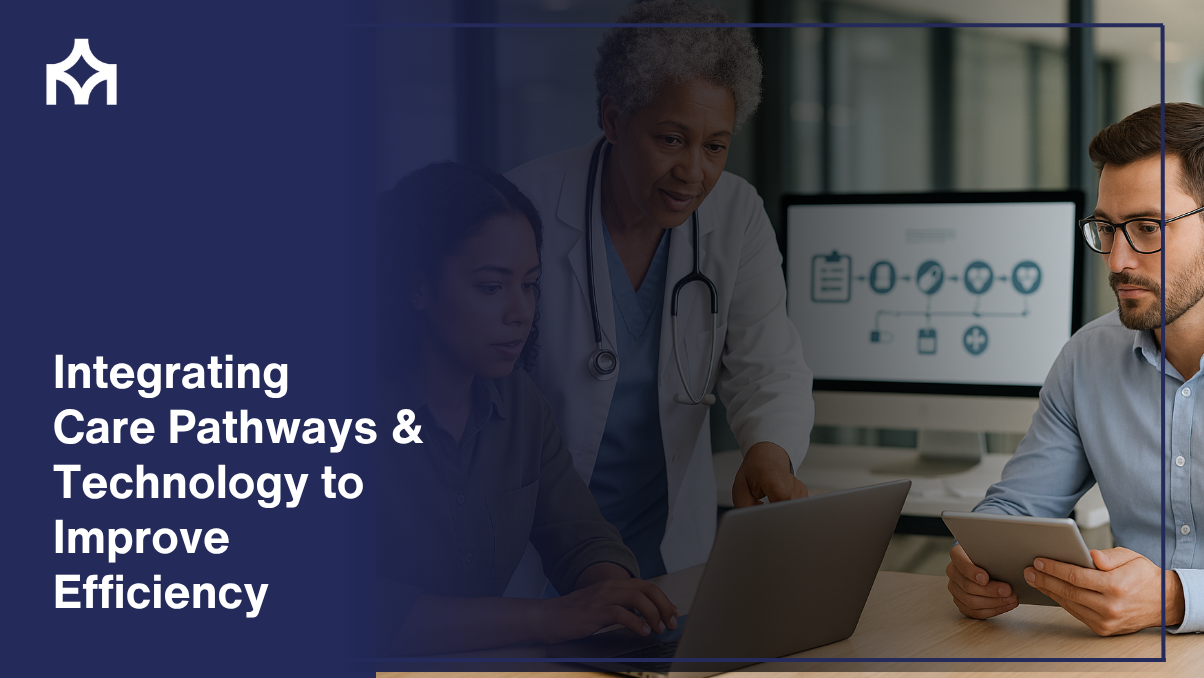
Integrating Care Pathways & Technology to Improve Efficiency
Integrating Care Pathways & Technology to Improve Efficiency
In today’s healthcare landscape, efficiency is about precision, coordination, and outcomes. Across hospitals, clinics, and health systems, the integration of care pathways with modern digital technology is reshaping how patients move through the continuum of care. This fusion is driving measurable improvements in efficiency, reducing variation, and helping providers achieve higher quality outcomes at lower cost.
According to the World Health Organization, nearly 20–40% of healthcare spending globally is wasted due to inefficiencies, duplication, and preventable complications (WHO, 2023). Streamlining care pathways standardized, evidence-based workflows that guide clinicians through diagnosis, treatment, and follow-up provides a structured framework to combat these inefficiencies.
But the real transformation happens when these pathways are embedded into technology platforms like Electronic Health Records (EHRs), Clinical Decision Support Systems (CDSS), and workflow automation tools.
The Power of Integrated Pathways
When care pathways are integrated into digital platforms, clinicians gain real-time access to the right information, at the right time. For example, an integrated EHR can automatically prompt evidence-based next steps, flag contraindications, or identify missing diagnostic inputs. This ensures consistency in care delivery and minimizes clinical variation, one of the largest sources of inefficiency in healthcare operations.
A 2022 study by Health Affairs found that hospitals using technology-enabled clinical pathways reduced care variation by 25% and improved adherence to best practices by 30%. Moreover, when digital workflows are linked with data analytics, hospitals can identify bottlenecks, predict delays, and adjust staffing or scheduling dynamically.
Technology as the Enabler of Efficiency
Artificial intelligence (AI), automation, and interoperability are key enablers in this new model of care delivery. AI-driven analytics, for instance, can forecast patient flow, predict readmission risks, and even recommend personalized treatment adjustments based on real-world evidence. Automation, on the other hand, eliminates manual administrative burdens tasks like prior authorization, documentation, and discharge planning freeing clinicians to focus on patient care.
In fact, the American Hospital Association reports that automation and digital integration can reduce administrative costs by up to 30% while improving staff productivity and patient throughput (AHA, 2023). Interoperability further enhances this by ensuring seamless data exchange across systems and care settings essential for continuity and coordinated care.
Building the Foundation for a Digital-Ready Care Pathway
The key to success lies in designing pathways that are dynamic, data-driven, and user-centric. This requires three essential steps:
- Map existing workflows to identify inefficiencies, redundancies, and points of failure.
- Digitize and standardize processes using clinical decision support and automation tools.
- Continuously measure and optimize using performance analytics to track KPIs like turnaround time, patient satisfaction, and cost per episode.
Organizations like Modality Global Advisors (MGA) are helping health systems accelerate this transition. By integrating data analytics, automation, and AI into clinical and operational workflows, MGA empowers healthcare providers to improve care coordination, reduce waste, and enhance both patient and financial outcomes.
Predictive and Proactive Care Future
As healthcare moves toward value-based models, integrating care pathways with intelligent technologies will become foundational. Hospitals that embrace this convergence will not only improve efficiency but also position themselves as leaders in predictive, patient-centered care.
The next frontier is not just digitization, it's intelligent orchestration. The ability to connect people, processes, and data seamlessly across the continuum of care is what will define the most efficient healthcare systems of tomorrow.
Sources: World Health Organization, 2023; Health Affairs, 2022; American Hospital Association, 2023